


When I first learned about the carnivore diet, one of the arguments for it were that this way of eating is the way humans were always meant to eat. But if we were always meant to eat only meat, then why do we need salt on the carnivore diet? Did our ancestors salt their food?!
On the carnivore diet, our bodies have different requirements for salt compared to a standard diet. The absence of carbohydrates, along with the increased consumption of protein, cause our bodies to require more salt to function optimally.
Salt is not just a flavor enhancer; it plays a vital role in maintaining our mineral balance and overall health.
In this article, we’ll discuss:
- why salt is important on the carnivore diet
- how much salt you need on the carnivore diet
- what happens to the body without salt on the carnivore diet
- which types of salt are best to consume on the carnivore diet
First, let’s talk about the role of salt within the body, especially when consuming a meat-only, or meat-based diet…
Why Do We Need Salt on the Carnivore Diet?
There are 2 primary components of salt:
- Sodium
- Chloride
Other components found in good quality salt are:
- Potassium
- Magnesium
- Calcium
FUN FACT: The components found in salt are also known as electrolytes. Some more examples of electrolytes are: Iron, Zinc, Calcium, Iodine, & Phosphoros; all needed in varying amounts to keep the body healthy.
Both of the main components in salt (Sodium and Chloride), play crucial roles in our body’s functioning:
- Sodium, along with other electrolytes like potassium and calcium, help in maintaining fluid balance and blood pressure. It also contributes to the proper functioning of nerves and muscles.
- Chloride, on the other hand, is less talked about but equally significant. It helps in regulating body fluids and is a critical component of hydrochloric acid in our stomach, essential for digestion and absorption of nutrients.
A good quality salt will help the body in several ways:
- Maintain and regulate correct fluid balance in the body (keeps you adequately hydrated)
- Maintain adequate blood pressure in the body
- Aids in proper functioning of nerves
- Aids in proper functioning of muscles
- Aids digestion and absorption of nutrients
So, not getting enough salt in your diet can have a pretty big negative impact. Especially since these are essential components, meaning it is something the body absolutely needs, but cannot produce.
But the carnivore diet, being primarily based on meat consumption, tends to be naturally rich in sodium and chloride. So then why is salt specifically so important when eating only meat? There are several reasons…
NOTE: If you’re after a really high quality salt, check out my article here. I detail exactly what to look for in choosing a top quality salt.
The Body’s Electrolyte Needs Change Drastically When Eating Only Meat
There are several things going on when you go on a meat only diet:
- You stop eating processed foods
- Because processed foods tend to be so high in salt, turning to a carnivore diet automatically reduces the amount of salt going into your body. Something it is not used to.
- You stop eating carbohydrates
- Eating carbohydrates holds water in your body, and when you stop, the body releases that water, along with a bunch of electrolytes you mostly get from eating salt.
- You consume much more meat and fat than the average person
- Your body now needs to produce much higher levels of digestive enzymes and bile for proteins and fats, and more salt will be needed to aid this. Again, something it is not used to.
As you can see, the changes made specifically when moving to the carnivore diet, uniquely affect how much salt your body needs in order to deal with the new way of eating. This is a big adjustment and it can take some time for the body to get used to things.
This is why when many people begin the carnivore diet, they start to have symptoms such as:
- heart beating fast
- muscle cramps
- fatigue
- digestive issues
- dizziness or headaches
You can see that these symptoms actually make a lot of sense when you realize they are directly related to what salt helps with in the body (muscles, nerves, digestion, blood pressure, etc.)

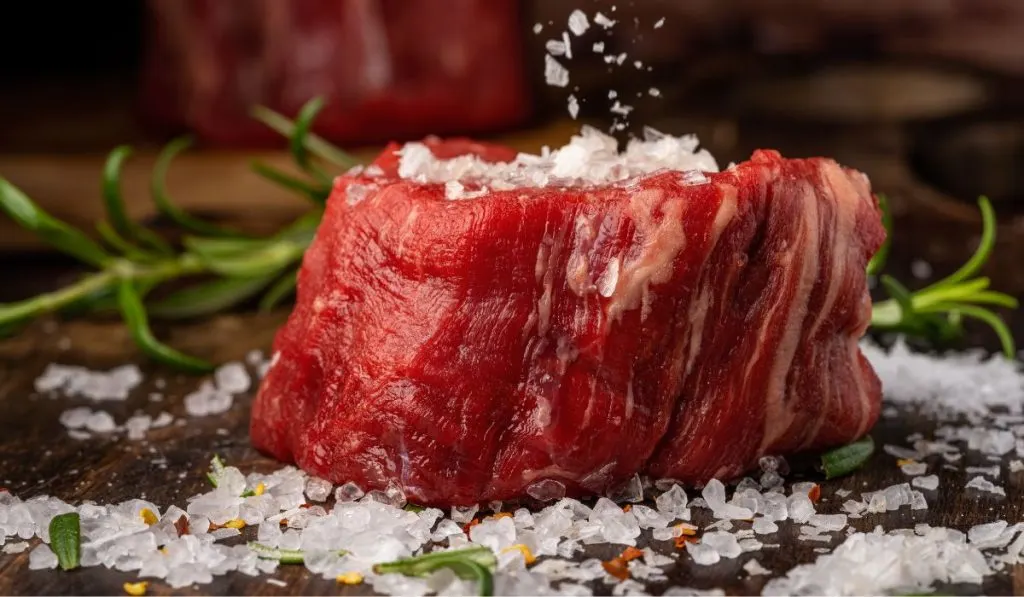
It’s not really about the carnivore diet not having adequate electrolytes. It is more about the body needing more electrolytes while it is trying to adjust to the new style of eating.
These are the reasons why salt becomes super important on the carnivore diet, especially at the beginning. The body is simply adjusting its fluid levels, which require an adjustment in salt levels.
TOP TIP: Salting your food generously, or including electrolyte supplements at the beginning of your carnivore journey can help alleviate adaptation symptoms, (I love these on Amazon as the ingredients are really pure with no additives or artificial sweeteners).
Our ancestors never ate processed foods, nor did they consume large amounts of carbohydrates, so they didn’t need salt in the same way we do today. But how much salt is adequate? And is there such a thing as too much or too little salt while on the carnivore diet?
How Much Salt Should You Have on the Carnivore Diet?
We established earlier in this article, that salt is definitely important at the beginning of the carnivore diet, so making sure that you salt your food generously when starting the carnivore diet is recommended. And you may want to also have some electrolytes like these (Amazon link) on hand for those days when you are having adaptation symptoms.
As a rough guideline, the World Health Organization (WHO) recommend a daily allowance of 6 grams of salt per day. However, needs will vary greatly depending on several factors such as bodyweight, body composition, diet, activity levels, etc.
I also mentioned earlier, that the carnivore diet naturally has sufficient amounts of sodium and chloride in it for the human body. So technically speaking, beyond the taste, and as long as you are feeling good, adding salt is not absolutely necessary on the carnivore diet unless you want it for flavor, which most of us will!
The reality on the ground is, there are some carnivores who do just fine without adding extra salt, and some that need it in order to feel their best. It will always come down to the individuals needs in the end. My suggestion is to go by taste. If things taste too salty, tone it down a little, and if they don’t taste salty enough, then increase the salt levels.
IMPORTANT: Salting your food generously is essential at the beginning of the carnivore diet, and cutting out salt should only be done if necessary e.g. you don’t feel good eating it, or you feel a lot better without it. A good quality salt is like a supplement for the body, much like electrolyte supplements like these.
As with most things that the body requires, too much or too little of anything is never a good thing, and it will be down to the individual to figure where their balance lies.
But generally speaking, there is no need to limit eating a regular amount of salt with your meals. It’s also worth noting though, that there are some situations where you should probably increase your salt levels, whether that be through electrolytes or with a high-quality salt…
When to Increase Salt/Electrolyte Intake on the Carnivore Diet
Situations where you will be losing salts from your body are times when you should pay attention to getting an adequate amount of salt into your body. How do we lose salts from the body? There are a few ways:
#1: We Lose Salt/Electrolytes When We Sweat
Sweating is the most common way we lose salts and electrolytes from our body. This can be through:
- Any form of exercise
- Saunas and hot baths
- Fever
- Hot weather
Anything that causes you to sweat will cause you to lose electrolytes from the body, and it’s a good idea to replace these salts either before, after or during these periods of sweating. You can simply add a pinch of salt to your water while working out, or add some electrolytes (I like these as they are free from artificial stuff).
#2: We Lose Salt/Electrolytes When We Pee
We also lose salts when we pee, and if you are having to go more often than usual for whatever reason (e.g. a urinary infection, drinking lots, etc.), then you should try and make sure you are having enough salt to replace what your body is losing.
#3: We Lose Salt/Electrolytes If We Have Vomiting or Diarrhea
When we are ill with vomiting or diarrhea, we lose a lot of fluids very quickly, and it is extremely important to not just replace the fluids lost, but also replace the electrolytes lost in order to help your body retain fluid more easily.
#4: Drinking Lots of Coffee Can Reduce the Amount of Salt in your Body


If you’re consuming large amounts of coffee throughout the day, then this will also have an impact on salt loss. According to this study, drinking coffee actually encourages more salt loss in your urine than someone who is not consuming coffee.
So, if you’re a coffee drinker, then bear in mind that you may need that little extra seasoning on your meat than a non-coffee drinker.
TOP TIP: If you’re looking for an electrolyte supplement, choose one that is unflavored and free of additives and artificial sweeteners, such as these available on Amazon.
Having enough salt in the diet is important to support nerve and muscle function, and to help maintain optimal health. And this becomes even more important when losing fluids through sweating, peeing, or during illnesses. But is there a difference between which salts or electrolytes you use in your diet?
Does Quality of Salt Matter on the Carnivore Diet?
In short, the quality of salt does matter. If you take a look at regular table salt, there are several issues with it, which will be important to someone taking a strict carnivore approach. Table salt can:
- be highly processed
- contain anti-caking agents
- contain artificial chemicals such as sweeteners or even sugars
- have synthetic iodine added
- be stripped of other essential nutrients such as magnesium, calcium and potassium during processing
You can see here, that regular table salt not only has things added into it that you don’t necessarily want in your body, but it also has been stripped of some of the important things our body needs, such as a wider range of electrolytes.
When you compare this to natural high quality sea salt, which contains:
- Higher mineral content
- Has been less processed
- Has a wider range of electrolytes available, such as potassium, magnesium, calcium and many other trace minerals.
The quality of salt you choose to use makes a huge difference both in terms of the balance of electrolytes it provides, and the benefit of not having anti-caking agents and such.
Which Type of Salt is Best on the Carnivore Diet?
The best types of salt to use on the carnivore diet are going to be natural, unrefined salts that have come from pollutant free areas of the world and have had nothing added or taken away from their natural form. There are a couple of choices:
- Natural sea salt
- Himalayan (pink) salt
My current favorite is Redmond Real Salt that you buy in bulk or in regular amounts in a shaker from Amazon. The brand is reputable, transparent, really high quality, and doesn’t contain any sweeteners, anti-caking agents, or any other additives. I also use Himalayan pink salt and Celtic sea salt at times, but Redmond’s is my favorite.
NOTE: If you’d like more detail on which type of salt may be best for you, check out my article, “Best Salt for the Carnivore Diet“. I go through all the trace minerals found in each of the salts and you can take a deep dive into which one may be best for you.
Hi, I’m Aysha,
I came to the carnivore diet with the hope of healing, & I love sharing what I learn in hopes it’ll help you too!
If you enjoy my content, consider leaving me a tip here.
I appreciate your kindness & support, and wish you good health 🙂